Saturday, August 9, 2014

Book Review: Two Vampire Novels

Image Credit: Goodreads
I did a semi-live blog of Team Human on Facebook recently, but I'll recap the gist here: Team Human is the Twilight antidote I didn't know I needed. For starters, the title. For seconds, the tagline: Friends Don't Let Friends Date Vampires. For thirds, this line: "A vampire who wants to go to high school?... That is the most ridiculous thing I've ever heard."

I enjoyed it for Mel's snark and for the perhaps-racist vampires (200 years of life doesn't prove you're not a bigot), but mostly for the way it wrestles with the question of how to deal with a friend making bad decisions when there's nothing you can do to stop them. Consent and self-determination are addressed extensively here – huge after Twilight's "I like to watch you sleep" bullshit – and in her attempts to save her best friend, Mel doesn't handle everything gracefully. Mel and her two female friends, Cathy and Anna, all react in different – and believable ways – to Mr. Handsome Vampire's presence in their school. And the eyeroll treatment that teen girl + mysterious vampire receives is hilarious.


Image Credit: Amazon
In contrast to Team Human, Claudia Gray's Evernight is the Twilight inversion that let me down. SPOILERS AHEAD.

Bianca has just transferred with her teacher parents to a boarding school which helps vampires readjust to humanity's ever changing concept of "normal."  Although this time it's a vampire school with a few humans in it, instead of the other way around, and Bianca – not her love interest Lucas – is the vampire, all the Twilight nonsense of "But it's for your own good!" carries on with a charming side of "You shouldn't trust anyone (except me)." At one point a side character, Raquel, tidily ticks off the warning flags for why Bianca should run from Lucas as far and fast as she can: starting fights, insisting that he is "protecting" her from non-threats, attempting to isolate her from support networks and loved ones. These are all real signs and elements of abusive relationships. I was excited – a vampire book addressing what healthy relationships are? Two in a row? Hooray!

Aaaaaand then Gray blithely handwaves away all of this as "He was just trying to protect me!"


Needless to say, I will not be reading any more of the Evernight series.

Thursday, March 27, 2014

Book Review: The Finisher by David Baldacci

Let me preface this by saying: this is my first time reading David Baldacci; this is David Baldacci’s first time (as far as I know) writing young adult SF/F; and, therefore, this is in no way a review of Baldacci’s larger canon of work, which I have never read and is not of the same genre as this book.


Vega Jane has never left the village of Wormwood – neither has anyone else in the village – until the night she sees her mentor vanish into the dangerous forest that surrounds the hamlet. Behind him, he’s left a series of cryptic clues for Vega to follow – if she can survive long enough to understand them.


I picked up The Finisher because I recognized Baldacci’s name and because someone had mentioned it as a readalike for The Giver. Unfortunately, The Finisher comes nowhere near Lois Lowry’s masterpiece. While it starts in a tone similar to The Giver – isolated village overseen by ruling council – Baldacci quickly starts tacking on subplots. The narrative jolts from dramatic moment to dramatic moment, made more confusing by the fact that Baldacci laces the story with arbitrary invented words (e.g., “session” instead of “year”), some of which are never fully explained. And then he throws in some magic. With no real rules or explanations, the nebulous magic saves (or hurts) various people Because Baldacci Said So whenever Vega Jane can’t think her way out of something.

For all that, the society Baldacci builds is the best thing about the book. The council members are flawed but well-intentioned, being rough doesn’t mean being cruel, and when it occurs, cruelty can be deliberate or unintentional. And I like the idea of fantasy AND dystopia. Unfortunately, Baldacci has not created a successful merger of the two genres.

Monday, February 10, 2014

Book Review: Kinslayer by Jay Kristoff

Kinslayer by Jay Kristoff is the second book of his Lotus War series. I read (and briefly recapped) this book last year and loved it, so naturally I picked up #2 once I heard it was out. (Spoilers for Stormdancer below. You've been warned.)

Alas, Kinslayer suffers from the "link the beginning to the end" syndrome shared by so many other second in the series books. After opening with a brief who's-who (and where they are) refresher, Kristoff adds several new characters to an already substantial cast, including a clanless slum worker and another Guildsman. The plot centers on the Lotus Guild's solution to Shogun Yoritomo's death, their plans against the Kagé, and the Kagé rebellion's attempt to stifle those plans. Unfortunately, I think Kristoff's multi-perspective style has done his plot a disservice here; he seems determined to hop into every significant character's head at least once and quite a number of the minor ones as well. Because of this and the multiple narrative threads he has running simultaneously, the storyline is very jarring, jolting back and forth in time, location, action, etc. Likewise, character development suffers in this book, since we're not in anyone's head but Yukiko's or Kin's long enough to watch them grow. I still love the infusion of Japanese culture and mythology into a steampunk world, but wish he'd kept to a smaller number of perspectives.

Endsinger, the final book in the trilogy, will be out in September 2014 and I do plan to pick it up. Hopefully all the different tendrils Kristoff's got going will reunite into a strong conclusion.

Monday, January 6, 2014

4 Recent Reads

Gentle readers, I am ashamed. I abandoned you for several months because I could not bring myself to tell you this truth: that budget cuts, the bane of libraries everywhere, caught up to me at my lovely new school job. It's probably the hardest job I've ever had to lose, even as I understood why I lost it. But the world has brightened again, and I am re-employed at a bookstore and a local library (both part-time). But the more important questions in life: what's good lately?

The Ascendant by Drew Chapman

Full disclosure: I picked this up at work as an unsolicited ARC and enjoyed myself quite a bit reading it. The Ascendant is a digital age thriller, focused on the possibility of a subtle cyber-financial war in our modern era. I can't say that it was revelatory, but it was fun. Snowy day, stay inside, winter fluff fun. Political machinations are involved, which pleases me. The protagonist actually experiences personal growth over the course of the book, which is even better. A very strong debut novel for Drew Chapman, good enough that I'm passing my ARC along to my father and freely recommending the title at work.


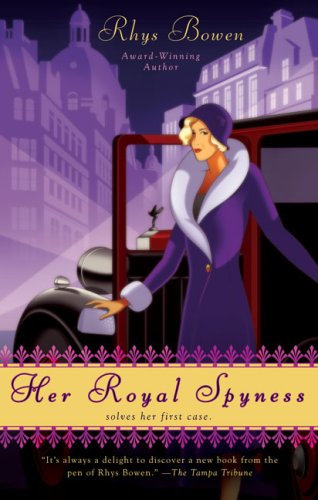
Her Royal Spyness by Rhys Bowen

I picked up Her Royal Spyness (first in a series of six) because my mother looooves Lady Victoria Georgiana - Georgie to her friends. Georgie is thrown headfirst into detective work when she discovers a Frenchman drowned in the bath of her family home. Bowen has a good sense of humor and develops Georgie - a broke demi-royal - fairly nicely, from hapless nobility to vaguely self-sufficient, with a good deal of flailing along the way. I would pass this one along to my friend who loves the Jeeves and Wooster series.


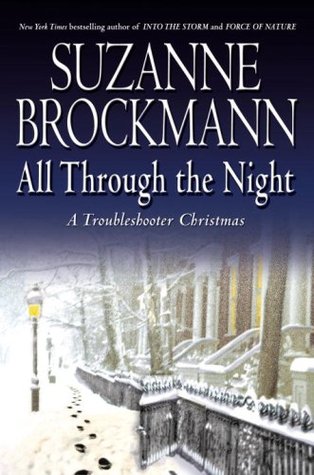
All Through the Night by Suzanne Brockmann

I'll be honest, I wanted to like this book. I really did. I'd read Force of Nature, the book in which protagonists Robin and Jules came to the fore, recently and picked this one up from the Christmas books display at my library. Alas, equal rights include the equal right to mediocre thriller fiction. There's one drama after another after another all barreled through at enormous rates of speed with minimal development. I understand that this is a short-and-sweet interlude sort of book, but I feel like Brockmann had 8 different possible plotlines and, instead of pruning, decided to shove them all in. I'd pass along Force of Nature, but skip this one.


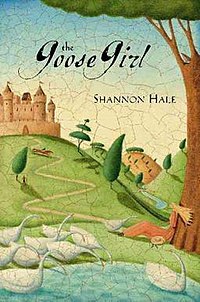
The Goose Girl by Shannon Hale

You couldn't possibly imagine getting through without a re-told fairy tale, could you? Me either. This one ticks all my boxes: strong female protagonist, well-defined magic, political intrigue. Check, check, check. When her lady-in-waiting attempts to assassinate her and seizes her role, Ani must learn to stand on her own two feet, using her talents and wits to prevent her greedy betrayers from throwing two kingdoms into chaos. If you read this and like it, try Hale's Princess Academy series as well. I would pass it along to Rayna, who I think might love re-told fairy tales as much as I do.

Saturday, August 31, 2013

So Many Books, So Little Time (to Shelve Them All)


The books arrived last Monday, but first a little perspective on where Square 1 was for me in all this:

Librarian's desk and empty bookshelves

Empty Shelves


If you stare through the display racks, you can see some stray books floating around back on the shelves – a couple of classroom sets (including The Incredible Journey and A Wrinkle in Time), but mostly 25 year old "issues" books.

Boxes of books lined up in the gym
The books all came into the gym, which is why my arms look so much buffer than they did a week ago. For the most part, fiction and non-fiction were in separate boxes, but those boxes were all jumbled together. So the engineering staff and a couple guys from climate control helped me move them all downstairs and get them (mostly) separated into fiction and non-fiction at least.


Book stacksWhere they ended up stacked up all over the place. Most were labeled in a general way: 811, Dre-Dru, enough to let us sort them into fic/non-fic without too much hassle.

And during breaks, I got to hash out the leftovers from the school building's previous tenants. The issues books have been escorted to the trash, especially after cracking one open and finding that it still dated from the days of "having a single mother turns you into a druggie."


I get by with a little help from my friends
I also shamelessly begged help from friends so we could sort the non-fiction boxes down into 100s/200s/etc. Priority for me ended up being the science books, especially the 500s, simply because I (rightly) suspected that they would need the most work & weeding and I wanted to get after them early. According to our collection, alas, Pluto is still a planet and the internet does not exist. Weeding these fully is going to be difficult. I was once advised to draw the line at anything that predates the internet, but that would leave hardly any books in some subject areas. These and issues books are probably going to be where I spend any money I get. The astronomy section is particularly bad. I also discovered my least favorite Dewey number: 595.4 - spiders.

By now, the 500s have overflown the space that was designated as theirs by the previous tenants. For better or worse, I suspect we will not have enough space for all the books we received. The good news is that this encourages me to be more aggressive with my weeding where I can be, to be more generous with teachers' "Ooooh, can I have this for my classroom?" requests, and to allow kids to take more books home with them for longer. I can also probably bring some books over to the other campus. The bad news? Some things that deserve shelf time may not get it.

 Things I Have Learned Include: the last person to have this collection liked fairy tales about as much as I did; petition for volunteers/minions early and often; do not order your books backwards (whoops); talk to other librarians - they will want to help you (to the tune of "here's how you can get $10,000 worth of stuff"). Talk and blog and share and tell everyone you know because people will just give you stuff - lots of stuff - because they want the next generation of readers to have access to the books they loved and learn to love them too. Library school students will volunteer for letters of rec. If you say "I want to do program X," people will say "oh my god, that sounds great, let me give you the number of my friend at the Program X Foundation." Basically, never shut up about your library. Of course, for most library people, that's not a struggle.

Starting to shelve books

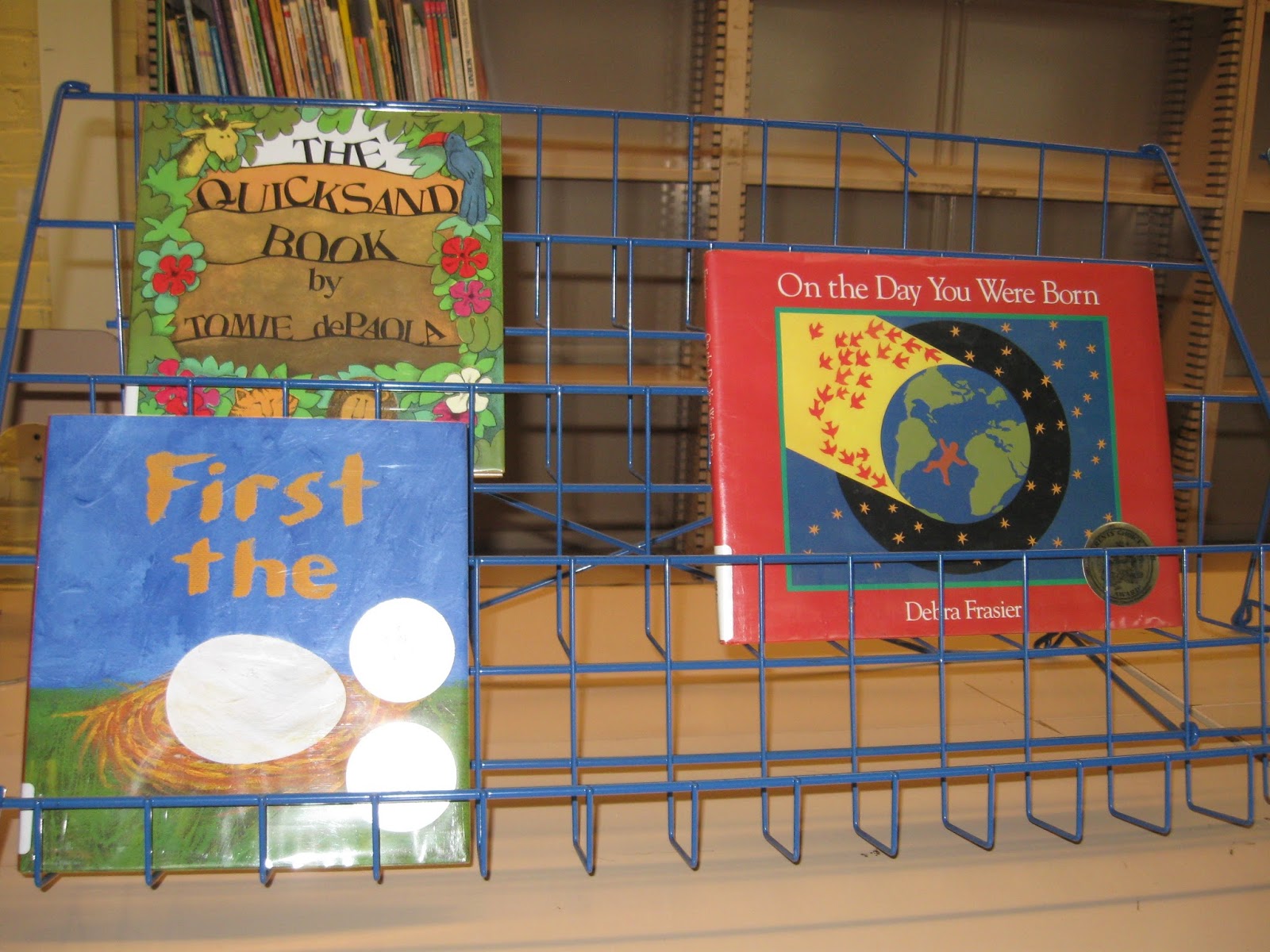
Books on the shelves with display racks

The displays with the 398s behind them.

Friday, August 9, 2013

Staff In-Service, Day Five


WE HAVE BOOKS! WE HAVE LOTS OF BOOKS!

Or, rather, we will have books. Amid all the getting to know you exercises and school tours and distribution of classroom materials (dry erase markers and construction paper!), I have received news that we will be receiving around 15,000 books. I actually staggered when my wonderful Director of Curriculum (Ms. Monique Bell) told me the news.

I have no idea when they get here. I have no idea how they were cataloged. I have no idea if I'm receiving 15,000 copies of To Kill a Mockingbird. I really don't care (okay, I don't want 15,000 copies of a single title) because WE HAVE BOOKS! I am going to have an actual library that we can actually use!

Monday, August 5, 2013

Staff In-Service, Day One

Or, the matter of starting a school library from the ground up.

I am finally, delightfully, and gainfully employed in my career of choice: librarianship. (Technically, library specialist, as I have no MLIS.) Beginning with this post, I intend to blog about the challenges and successes of starting a school library from the ground up.

Just as a point of reference, here are some things that might be good for you to know:

- I have very little formal library education, amounting to a single children's literature class in college and a CE course in "Managing the One-Person Library" through Simmons

- However, I have worked as a page at the Oshkosh Public Library in two different departments (Reference & Adult Services - which included Teen - and Tech)

- I have my eye on library school, yes I do.

- My time will be split between two campuses.

- My budget is $0.

In short: At under age 30, I am going to run 2 libraries without an MLIS degree, with substantially less than 5 years of experience and no money at all.

Watch me learn on the fly!


What I'm reading today: Seraphina by Rachel Hartman. Dragon/human politics and political intrigue set in a medieval-ish world with a musical backdrop. Going to try to get this one on my shelves.

Saturday, July 20, 2013

Summer Reading: A List

My summer reading list has been a mix of new, newish, and old. I can't imagine that Captain Underpants and Diary of a Wimpy Kid require any more reviews than they've already had (but they were on my reading list, compiled with the help of a second grader). I've been trying to work on bringing myself current with lit for younger kids – you may have noticed that I heavily favored mythology/fairytale-based YA lit. So the idea is to (at least occasionally) break out of that mold.


Code Name Verity by Elizabeth Wein

The intertwined stories of a spy and an Air Transport Auxiliary service member who become friends. After parachuting into France, Verity is caught by the local Gestapo and must bargain for her life. This is her story, and the story of her friendship with the pilot who brought her to France.

So very, very, very good and I am afraid to say more than that. Read this book.


Maniac Magee by Jerry Spinelli

The story of an orphaned boy looking for a home in the racially divided town of Two Mills, Pennsylvania. I wanted to make a point of including this book on this list because I never read it when I was younger, because everyone knew that it was a sports book because it was by Jerry Spinelli who wrote books about sports, which were for boys. But it's also about home and family and reading and race and How Legends Are Born. It is, in short, worth recommending to just about everyone, regardless of whether or not it is "their kind" of book.


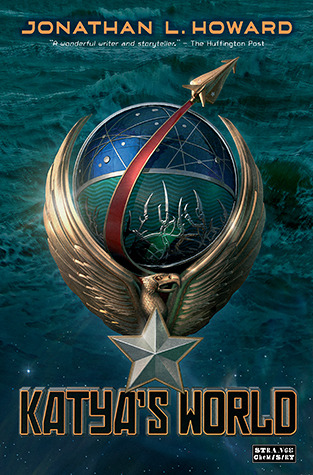
Katya's World by Jonathan Howard

Katya was raised on the Earth colony of Russalka, a distant, storm-tossed waterworld. People live deep beneath the ocean's stormy waves and live off the ocean's resources. Katya is much more interested in her first submarine voyage as a member of the crew. It's supposed to be a routine run until their boat is commandeered to transport a political prisoner.

Political intrigue and a strong female lead? Yes please! Both sides are cast in shades of grey. There is no unnecessary love triangle and there's enough action to satisfy just about anyone. Highly recommended.


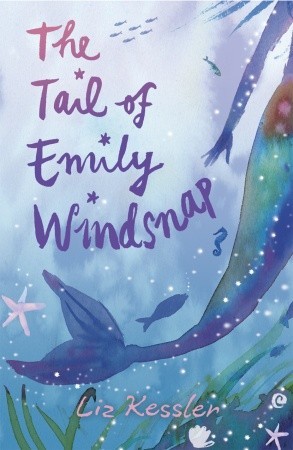
The Tail of Emily Windsnap by Liz Kessler

I wanted to like this book. Kessler builds an interesting world in which Emily, who has never been allowed in the water, is finally allowed to take swimming lessons ... and discovers that she's a mermaid. She goes looking for her father and in the process discovers a whole world beneath the sea. Told from a first person perspective, Kessler has the voice of a twelve-year-old down perfectly. Unfortunately, that's where the book loses me. I wish I could enjoy that tone or at least ignore it, but I just can't get into this book.


Alif the Unseen by G. Willow Wilson

This book is fighting tooth and nail to be my favorite book of the summer. Instead of diving back into Euro-centric stories, Wilson deftly weaves together Arabic mythology (djinn! Empty Quarter! 1001 Nights!), modern technology, and the events of the Arab Spring into this absolutely brilliant tale. When Alif, a young Arab hacker, falls in love with Intisar, he wants to believe that their relationship has a future. But she is promised to another. As a keepsake, though, she sends him a book: The Thousand and One Days. And Alif's world shifts. When he finds himself pursued by the shah's security forces, Alif seeks allies who may not be quite human. The magic in this book is sneaky. Alif might just be going crazy or becoming dehydrated. Or maybe djinn still walk the world.


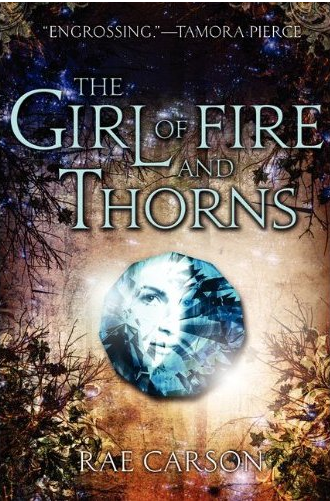
The Girl of Fire and Thorns by Rae Carson

Lucero-Elisa, a princess, has been chosen by god to perform a task. When she was born, a Godstone was implanted in her navel, signifying her selection by a higher power. When she is married off, it is because her husband, Alejandro de Vega, needs her to be a savior. His country is in turmoil and war looms on the horizon. Elisa is not sure she's ready to save anyone – but she may not get a choice.

This is not a perfect book. There's some sort of almost romance and the book equivalent of a training montage (Elisa goes into it fat and comes out fit and ready to defend her country). But the politics and the young princess finding her feet and the religious schisms are all fascinatingly believable. It's a strong debut novel and I'm looking forward to picking up The Crown of Embers, next in the series. Two notes: the main character is pretty clearly Hispanic (but in a very nonchalant way) and the religion in question seems to be an alternate universe take on Christianity. The former is great; the latter may be problematic for some readers.

Sunday, May 12, 2013

Book Review: Croak by Gina Damico

"Lex wondered, for a fleeting moment, what her principal's head might look like if it were stabbed atop a giant wooden spear."

For her first 14 years of life, Lex was a good student. Model, even. But in the last two years, she's turned vicious and angry – and even she doesn't know why. Fed up with her behavior, her parents send to live with her uncle in upstate New York for the summer, hoping that work on Uncle Mort's farm will help her settle down. But "Uncle Mort's farm" isn't a farm at all. He's a Grim Reaper and he thinks Lex has the potential to join the business.

Lex quickly settles into the work – except when she encounters a murder victim. Then the guilty start to inexplicably die and Lex becomes obsessed with finding out why. But if she succeeds in catching the killer, will she stop them or join in?


My thoughts: I love the premise of this book and as a first published novel, Damico has made a solid start. Some of the characters fell a little flat for me – I was expecting to see Lex grow more than she did over the course of this novel, but with more to come, perhaps Damico has chosen to space out the character development a little more. I love the town, the system, the work that the Grims do, but Damico makes occasional aside commentary on Teenagers As A Whole that I suspect would have irritated me at 17. That said, there's plenty of sarcasm and funny moments in the book. Anyone who's ever been inexplicably furious with the world will relate to Lex and I do like that she doesn't magically "outgrow" adolescence in the space of 3 months, which seems to be a trend these days. It's fast-paced, full of puns, and it doesn't sanitize growing up.


Readalikes: Scorch is the next in the series. The internet recommends Hold Me Closer, Necromancer, a series about a college dropout who finds he has necromantic powers. Elsewhere by Zevin features a protagonist in the afterlife, fighting to mature in a world that causes you to age backwards. Mort by Terry Pratchett is a hilarious book about Death taking an apprentice.

Friday, April 19, 2013

Shortie Review: Darkside by Tom Becker

Cover of Darkside by Tom Becker
Hey, do you remember when I said I was going to "get back to you" about Darkside, which the internet recommended to me as a readalike for Death Watch?

No?

Well I did. Darkside is a much faster read with a lot more action, but features the same "a town with secrets" feel to it that Death Watch had. When Jonathan Starling starts seeing strange people following him around London, he mostly can't figure out why – aside from a long truancy record and an ill father, he's not particularly remarkable. But when he starts digging, he uncovers mentions of the "Darkside," a city-within-the-city of London and the apparent source of his problems. Soon he's in way over his head and he'll be lucky if he can even survive...

Everything in this book is shades of grey. The "good guys" are only mostly good and the "bad guys" aren't always wholly evil. Several of the plot points are left open, but as the series is five books long, that's unsurprising. As a whole, the story meshes teen detective with urban fantasy surprisingly well. Lifeblood is the next in the series.

Saturday, March 2, 2013

Book Review: Half Upon a Time by James Riley


"Once upon a time, Jack wouldn’t have been caught dead in a princess rescue."
Jack has no particular interest in what he’s “supposed” to do – go on adventures, rescue princesses, and perhaps become a hero. But when May, a “punk princess” literally drops into his life the two set off on a quest to discover her past and save May’s grandmother.


My thoughts: This book takes the neat and tidy notions of “once upon a time” and “happily ever after” and plays with them. It also manages to bundle most of the big fairy tales into a single story – Snow White, Sleeping Beauty, Little Red Riding Hood, and Jack and the Beanstalk are all here.  The story moves quickly from place to place with plenty of action along the way. The next in the series is Twice Upon a Time.

Readalikes: Wee Free Men by Terry Pratchett should be fun for those who like the humor in this story. The graphic novel series Fables by Bill Willingham also brings together a wide range of folk and fairy tales – all the characters instead are hiding in New York City. Heir Apparent by Vivian Vande Velde follows the ‘normal kid drops into a fairy tale’ theme – but this time deliberately, as part of a virtual reality game; when the game malfunctions, the only way out is to win.

Sunday, February 10, 2013

Book Review: Death Watch by Ari Berk

Cover of Death Watch by Ari Berk


First line: “He should have gone home. It was after eleven, so he’d have been home already.”

About: When Silas Umber’s father Amos doesn’t come home one night, Silas refuses to accept that he’s gone. But without money, he and his mother must abandon their home in Saltsbridge and return to Lichport, the town where Silas was born and where Amos worked. As he roams the town, he slowly uncovers the truth about his father’s work: his father was an Undertaker, responsible for tending to the dead. Now the townsfolk call on Silas to take up his father’s mantle and Silas must navigate between his new duties, the dangers of Lichport, and his search for his father.

My Thoughts: Death Watch is heavily invested in the folklore that surrounds death, but unlike most “gothic” novels, the dead aren’t horrifying, nor are they sexy vampires. The pacing is slow and the town itself is developed as a character. Because of the way that Berk follows multiple different story threads, though, the book doesn’t drag and Berk is a sufficiently deft storyteller that the different elements don’t become confusing.

Highlights:  Dark, rich, slow

Readalikes: Mistle Child, the second book of the trilogy. The Graveyard Book by Neil Gaiman. The internet recommends Darkside by Tom Becker but you can’t have it because I now have it reserved. (I’ll get back to you all on that one.)

Wednesday, January 2, 2013

A Year in (Selected) Books

Well now. Two years of persistent neglect have left me to chastize myself and make a valiant attempt to revive this blog.

I have, in this time, undergone several Big Events including, but not limited to, writing a thesis, graduating from college with my Comparative Literature degree, moving from Big City (Philly) to small hometown to Medium City with partner (with no job and limited funds), and finding a job in the Medium City. I have laughed, cried, cooked, read, traveled, and even won some hard-fought battles along the way. I have learned that "being an independent adult" is more restrictive than I had imagined.

I have taken up a 5-year journal and have even managed to stick with it for a couple months. I find that a couple sentences a day with a specific question for each day keep my mind from falling into a rut.

In addition to that journal, I've read a number of books that I quite enjoyed. (I also settled in with old favorites on occasion.) My most-enjoyed books/series of this year are as follows:

Percy Jackson & the Olympians (series) by Rick Riordan: The ancient Greek gods are real and active! Earned my love for offering an updated take on old myths (the gods live on the 600th floor of the Empire State Building) – and not glossing over the less pleasant bits. And Riordan has done his homework, doing a good job of sticking to the pre-existing mythology.

The Heroes of Olympus (unfinished series) by Rick Riordan: The Greek kids meet the Roman kids as part of an unwitting – and unwilling – exchange program of sorts. This continuation of Percy Jackson & the Olympians delves into the differences between Greek and Roman mythology, leaving the gods with splitting headaches.

Ghostwritten by David Mitchell: Intertwining stories for the win! Unquestionably, the best part of this is looking for the way all the characters' lives touch each other. Occasionally it's confusing, but I was never bored reading it.

Stormdancer (Lotus War series) by Jay Kristoff: Japanese steampunk with a strong female main character and mythological creatures and evil corporations and basically all the things I like best in the world wrapped into one beautiful package of a book. I'm looking forward to the next installment of this series.

Mothership (Ever-Expanding Universe) by Martin Leicht & Isla Neal: Another first-in-series, this one is teen pregnancy in space and all awkward, complicated, messy problems attached to it. With science fiction and aliens and invaders of the aforementioned mothership! It's fun and more importantly, it's not reductive.

The Alloy of Law (a Mistborn novel) by Brandon Sanderson: Set a long time after the original Mistborn novels (so I'm told), I enjoyed this. If you haven't read the original Mistborn series, don't let that stop you! I haven't read it either, but I followed what was going on just fine. My mind wasn't blown, but it was a fun ride and good enough that I'm going to have to check out the series from my local library.

A Long, Long Sleep by Anna Sheehan: Ooooh, futuristic fairytale remake! This is the story of what happens when Sleeping-Beauty-in-the-Future wakes up. The world has changed, her parents have died, she's now the heiress to their business empire, and someone is trying to kill her. The novel attempts explores the difficulties of being dropped into a world one ought to know – but doesn't – as Rose deals both with her past and her future.

What I've Recommended:

The Invention of Hugo Cabret by Brian Selzwick: I love recommending this book now for the same reasons I loved recommending it when it was first published. It is fantastic for kids who aren't "big readers" but feel left behind by their classes and classmates. It's thick enough to look impressive and easy enough (and illustrated enough) to be accessible to kids who struggle with or don't like reading. At the same time, it's a good enough read that older kids will like it too.

Pride of Baghdad by Brian Vaughn & Niko Henrichon: Recommended to a co-worker for her kids. They were assigned non-fiction reading and this graphic novel is a) a great introduction to the medium, b) based on a non-fiction story, c) a great parable for war on a larger scale, and d) contains lions. (Apparently lions are a Thing for her daughter.)

Circle of Magic by Tamora Pierce: Recommended to the above-mentioned co-worker for her daughters. I think the series is more likely to be parent-approved than her world of Tortall and there are girl characters and boy characters and they manage to interact without ~*~cooties~*~ OR ~*~kissing~*~ which I find to be a refreshing change.

Thursday, December 17, 2009

Curried Squash Soup

I think I've been neglectful. It has, however, been worth it. I've cooked until my arm has nearly fallen off. I've made (among other things) apple butter, cranberry butter, gumbo and this bit of lovely.

Curried Butternut Squash Soup

1 butternut squash, quartered and seeded
2 medium (large? I don't know, about tennis ball sized) onions, peeled and quartered
1 large or 2 small apple(s), cored, peeled and diced
1 medium head garlic, minced
6 C vegetable broth
1 t. brown sugar
1 bay leaf
1.5 T curry powder or more. I'm a big fan of curry, so I think I put in 2.5 T or something like that
1/2 t. dried oregano
1/2 t. ground cinnamon
1/2 t. ground ginger (N.B. this is necessary in my house: my sister is allergic to ginger, so there isn't any in our curry. Yours probably has some already.)
1/4 t. ground nutmeg
A touch of chili or cayenne pepper powder. Juuust enough to give it a little extra kick. I'd say a scant 1/4 t.
1 C plain yogurt

Preheat oven to 350F. Put squash and onions on to baking sheet. Brush squash with olive oil so it doesn't dry out.

Roast in oven. Keep an eye on it while it's in here. The onions will be tender and ready to come out long before the squash, and they'll start to scorch. When they go soft and start turning brown, pull them out with tongs and put them aside.

When the squash is tender (I think it took me 50 minutes or so), pull it out of the oven and let it cool. Once it has, peel it and cut into 1.5-2 inch chunks. Don't worry about chopping it up finely or precisely; it's going to get cooked until it falls apart and then run through the blender. Chop the onion up into smaller pieces.

At this point, I threw a bit of olive oil into the bottom of my stock pot and cooked the onions a little more. I like my onions sweeter and more caramelized than a lot of people, so that's totally optional.

Put squash, onions, apple, garlic, broth, brown sugar and all the spices into the stock pot. Bring it all to a boil and then let it simmer until everything falls apart when you poke it with a fork. Make sure the salt, pepper and other seasonings are to your taste and adjust as needed. Then let it simmer for another 5 minutes. Remove the bay leaf. Once you're there, you can do this one of two ways: you can turn the heat all the way down and blend it to smithereens with an immersion blender or you can take it all off the heat, let it cool and run it through a blender/food processor, in batches if necessary, until it's all smoothed out. If you've used an immersion blender, take the pot off the heat. Either way, stir in the yogurt until everything is blended together.

If you're eating right away, heat it back up and serve hot. Most of mine was divided into single serving portions and frozen. It reheats wonderfully.

Sunday, September 27, 2009

Singing a Novel in Blues

I recently read The Underneath by Kathi Appelt. It was, as most books are (at least in part), a story about relationships, the family you're born with, the family you make, friendship and love. This story is set in the bayous of Eastern Texas (I hadn't realized before this that Texas had bayous at all, though after looking at a map, I feel like I should have figured that out long ago.) and the stories of family and friendship are played out through an abused dog, an abandoned cat and her kittens. I truly enjoyed the book and so when I trotted off to find a link to it, I decided to take a look at what other people had to say. Some loved it, others found it mediocre. But what surprised me were the most negative reviews. Those readers complained that the book was insufferably slowed by repetition, annoyingly full of lists and, according to a few readers, "condescending."

I know interpretation is a personal thing and so on, but I think a lot of the people irked by the book are missing something. They're reading the text as words on a page, instead of hearing the story, either in their minds or spoken aloud. See, The Underneath is a pretty good book on paper, but when you read it aloud, it becomes amazing. It's full of myths and folktales (I'm going with 'folkmyths' for the rest of this post, because they both seem to be present) and draws on blues music so heavily that with only minimal work, you could probably turn this novel into a (long) song. These are the things that stayed with me through this novel, so they're the ones I'm going to discuss.

If you read The Underneath aloud, the traditions Appelt draws on show up in full force, both the Blues and folkmyths. The blues in particular are explicitly invoked early on, when Ranger's song draws the calico cat to him:
Oh, I woke up on this bayou,
Got a chain around my heart,
Yes, I'm sitting on this bayou
Got a chain tied round my heart...

This kind of repetition is present throughout the whole novel. The stories in it are told and re-told like the song - each iteration is like the others, but not quite the same. Something is added or altered - little details from before become whole stories in their own right; another character retells an earlier story. Bit by bit, the story grows.

In the reviews I read, Appelt's tendency to list things (particularly trees) draws frequent criticism. I can see where the impatient reader might find these lists tedious, but they add to the melodic tone of the book and again draw on a common feature of folkmyths and fairytales. Medieval tales in particular feature extensive lists1 while Grimm's Fairytales (the unaltered versions) are full of repetition.2 Appelt's listing of trees pulls from this tradition, but diverges from its typical use. Her lists of trees are not so much as list as an invocation: the trees are witnesses to the events of the bayou and Appelt calls on them to help tell the story. As the tale says, "Trees are the keepers of stories." One loblolly pine becomes a character in its own right. The novel tells/sings its entire life story, from a tiny seed to a lightning struck, hollowed out trunk, to its final end when it falls into the bayou, abandoned by its branches and roots.

Appelt even finds a way to turn this invocation and repetition into one of the most familiar elements of any fairytale: "A tree's memory is long, stored in its knots and bark and pulp. Ask the trees and they will take you back a thousand years...." Now perhaps this is just me, but that sounds like a tree's version of "once upon a time."3

The repetition in this novel, with the traditions of blues music and folkmyths behind it, helps pull a sweet story about a makeshift family of animals into the realm of the folkmyths it draws upon. I can see how this reiteration could frustrate those who like faster-paced stories, but it is not condescending. If anything, it is the reverse: the Appelt clearly expects her audience to understand the traditions upon which she is drawing and to see how they add to the story.

And to all those frustrated by the repetition and pace, I really do suggest that you try reading the story aloud. It's an entirely different experience.


1) You haven't read a list until you've read the Mabinogion or Sir Gawain and the Green Knight. Half a dozen trees have nothing on a list of all the knights with all their abilities, the names of their fathers, horses, swords and dogs. Sir Gawain and the Green Knight has a particularly lengthy section on a feast, listing off all the foods eaten, what they were served on (particular mention is made of the eating utensils) and how the feasting hall was decorated while the Mabinogion has a list of knights ("The Catalog of Arthur's Companions") that goes on for several pages including such names as "Sight, son of Seer," "Boar, son of Restless" and "Watch, son of Watch-dog.")

2) "The Twelve Dancing Princesses" is a particularly striking example of this kind of repetition. Nearly everything happens in threes.

3) There is an entire essay - and a lengthy one at that - waiting to be written about the bayou/setting (trees included) as a character in this novel, but I will leave that to someone else.


Links for the interested to the book's page on Goodreads and on Amazon.