Showing posts with label books. Show all posts

Monday, January 6, 2014

4 Recent Reads

Gentle readers, I am ashamed. I abandoned you for several months because I could not bring myself to tell you this truth: that budget cuts, the bane of libraries everywhere, caught up to me at my lovely new school job. It's probably the hardest job I've ever had to lose, even as I understood why I lost it. But the world has brightened again, and I am re-employed at a bookstore and a local library (both part-time). But the more important questions in life: what's good lately?

The Ascendant by Drew Chapman

Full disclosure: I picked this up at work as an unsolicited ARC and enjoyed myself quite a bit reading it. The Ascendant is a digital age thriller, focused on the possibility of a subtle cyber-financial war in our modern era. I can't say that it was revelatory, but it was fun. Snowy day, stay inside, winter fluff fun. Political machinations are involved, which pleases me. The protagonist actually experiences personal growth over the course of the book, which is even better. A very strong debut novel for Drew Chapman, good enough that I'm passing my ARC along to my father and freely recommending the title at work.
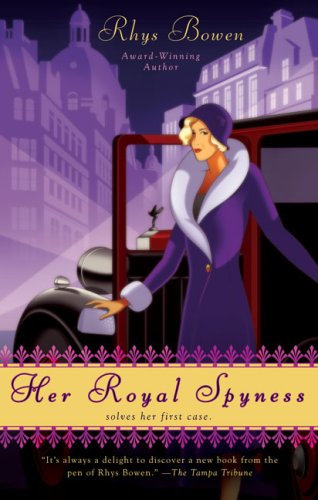

Her Royal Spyness by Rhys Bowen

I picked up Her Royal Spyness (first in a series of six) because my mother looooves Lady Victoria Georgiana - Georgie to her friends. Georgie is thrown headfirst into detective work when she discovers a Frenchman drowned in the bath of her family home. Bowen has a good sense of humor and develops Georgie - a broke demi-royal - fairly nicely, from hapless nobility to vaguely self-sufficient, with a good deal of flailing along the way. I would pass this one along to my friend who loves the Jeeves and Wooster series.
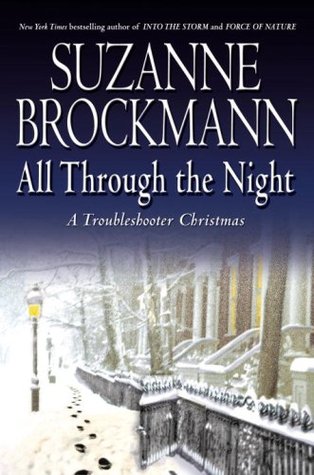

All Through the Night by Suzanne Brockmann

I'll be honest, I wanted to like this book. I really did. I'd read Force of Nature, the book in which protagonists Robin and Jules came to the fore, recently and picked this one up from the Christmas books display at my library. Alas, equal rights include the equal right to mediocre thriller fiction. There's one drama after another after another all barreled through at enormous rates of speed with minimal development. I understand that this is a short-and-sweet interlude sort of book, but I feel like Brockmann had 8 different possible plotlines and, instead of pruning, decided to shove them all in. I'd pass along Force of Nature, but skip this one.
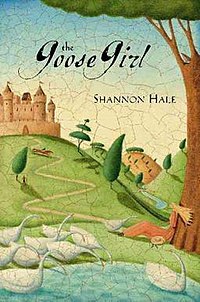

The Goose Girl by Shannon Hale

You couldn't possibly imagine getting through without a re-told fairy tale, could you? Me either. This one ticks all my boxes: strong female protagonist, well-defined magic, political intrigue. Check, check, check. When her lady-in-waiting attempts to assassinate her and seizes her role, Ani must learn to stand on her own two feet, using her talents and wits to prevent her greedy betrayers from throwing two kingdoms into chaos. If you read this and like it, try Hale's Princess Academy series as well. I would pass it along to Rayna, who I think might love re-told fairy tales as much as I do.

Saturday, July 20, 2013

Summer Reading: A List

My summer reading list has been a mix of new, newish, and old. I can't imagine that Captain Underpants and Diary of a Wimpy Kid require any more reviews than they've already had (but they were on my reading list, compiled with the help of a second grader). I've been trying to work on bringing myself current with lit for younger kids – you may have noticed that I heavily favored mythology/fairytale-based YA lit. So the idea is to (at least occasionally) break out of that mold.


Code Name Verity by Elizabeth Wein

The intertwined stories of a spy and an Air Transport Auxiliary service member who become friends. After parachuting into France, Verity is caught by the local Gestapo and must bargain for her life. This is her story, and the story of her friendship with the pilot who brought her to France.

So very, very, very good and I am afraid to say more than that. Read this book.


Maniac Magee by Jerry Spinelli

The story of an orphaned boy looking for a home in the racially divided town of Two Mills, Pennsylvania. I wanted to make a point of including this book on this list because I never read it when I was younger, because everyone knew that it was a sports book because it was by Jerry Spinelli who wrote books about sports, which were for boys. But it's also about home and family and reading and race and How Legends Are Born. It is, in short, worth recommending to just about everyone, regardless of whether or not it is "their kind" of book.


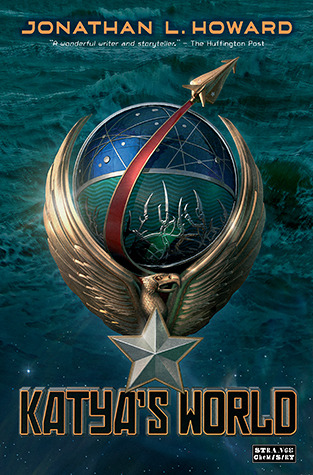
Katya's World by Jonathan Howard

Katya was raised on the Earth colony of Russalka, a distant, storm-tossed waterworld. People live deep beneath the ocean's stormy waves and live off the ocean's resources. Katya is much more interested in her first submarine voyage as a member of the crew. It's supposed to be a routine run until their boat is commandeered to transport a political prisoner.

Political intrigue and a strong female lead? Yes please! Both sides are cast in shades of grey. There is no unnecessary love triangle and there's enough action to satisfy just about anyone. Highly recommended.


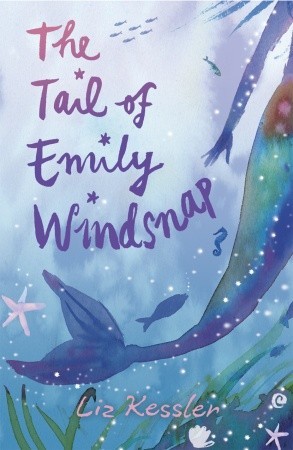
The Tail of Emily Windsnap by Liz Kessler

I wanted to like this book. Kessler builds an interesting world in which Emily, who has never been allowed in the water, is finally allowed to take swimming lessons ... and discovers that she's a mermaid. She goes looking for her father and in the process discovers a whole world beneath the sea. Told from a first person perspective, Kessler has the voice of a twelve-year-old down perfectly. Unfortunately, that's where the book loses me. I wish I could enjoy that tone or at least ignore it, but I just can't get into this book.


Alif the Unseen by G. Willow Wilson

This book is fighting tooth and nail to be my favorite book of the summer. Instead of diving back into Euro-centric stories, Wilson deftly weaves together Arabic mythology (djinn! Empty Quarter! 1001 Nights!), modern technology, and the events of the Arab Spring into this absolutely brilliant tale. When Alif, a young Arab hacker, falls in love with Intisar, he wants to believe that their relationship has a future. But she is promised to another. As a keepsake, though, she sends him a book: The Thousand and One Days. And Alif's world shifts. When he finds himself pursued by the shah's security forces, Alif seeks allies who may not be quite human. The magic in this book is sneaky. Alif might just be going crazy or becoming dehydrated. Or maybe djinn still walk the world.


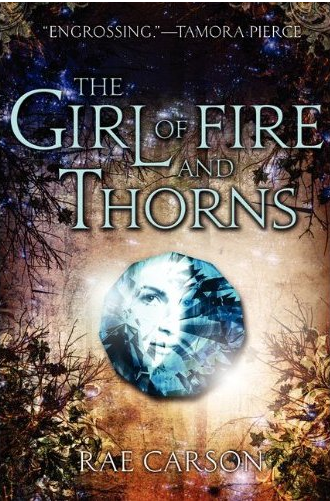
The Girl of Fire and Thorns by Rae Carson

Lucero-Elisa, a princess, has been chosen by god to perform a task. When she was born, a Godstone was implanted in her navel, signifying her selection by a higher power. When she is married off, it is because her husband, Alejandro de Vega, needs her to be a savior. His country is in turmoil and war looms on the horizon. Elisa is not sure she's ready to save anyone – but she may not get a choice.

This is not a perfect book. There's some sort of almost romance and the book equivalent of a training montage (Elisa goes into it fat and comes out fit and ready to defend her country). But the politics and the young princess finding her feet and the religious schisms are all fascinatingly believable. It's a strong debut novel and I'm looking forward to picking up The Crown of Embers, next in the series. Two notes: the main character is pretty clearly Hispanic (but in a very nonchalant way) and the religion in question seems to be an alternate universe take on Christianity. The former is great; the latter may be problematic for some readers.

Friday, April 19, 2013

Shortie Review: Darkside by Tom Becker

Cover of Darkside by Tom Becker
Hey, do you remember when I said I was going to "get back to you" about Darkside, which the internet recommended to me as a readalike for Death Watch?

No?

Well I did. Darkside is a much faster read with a lot more action, but features the same "a town with secrets" feel to it that Death Watch had. When Jonathan Starling starts seeing strange people following him around London, he mostly can't figure out why – aside from a long truancy record and an ill father, he's not particularly remarkable. But when he starts digging, he uncovers mentions of the "Darkside," a city-within-the-city of London and the apparent source of his problems. Soon he's in way over his head and he'll be lucky if he can even survive...

Everything in this book is shades of grey. The "good guys" are only mostly good and the "bad guys" aren't always wholly evil. Several of the plot points are left open, but as the series is five books long, that's unsurprising. As a whole, the story meshes teen detective with urban fantasy surprisingly well. Lifeblood is the next in the series.

Sunday, February 10, 2013

Book Review: Death Watch by Ari Berk

Cover of Death Watch by Ari Berk


First line: “He should have gone home. It was after eleven, so he’d have been home already.”

About: When Silas Umber’s father Amos doesn’t come home one night, Silas refuses to accept that he’s gone. But without money, he and his mother must abandon their home in Saltsbridge and return to Lichport, the town where Silas was born and where Amos worked. As he roams the town, he slowly uncovers the truth about his father’s work: his father was an Undertaker, responsible for tending to the dead. Now the townsfolk call on Silas to take up his father’s mantle and Silas must navigate between his new duties, the dangers of Lichport, and his search for his father.

My Thoughts: Death Watch is heavily invested in the folklore that surrounds death, but unlike most “gothic” novels, the dead aren’t horrifying, nor are they sexy vampires. The pacing is slow and the town itself is developed as a character. Because of the way that Berk follows multiple different story threads, though, the book doesn’t drag and Berk is a sufficiently deft storyteller that the different elements don’t become confusing.

Highlights:  Dark, rich, slow

Readalikes: Mistle Child, the second book of the trilogy. The Graveyard Book by Neil Gaiman. The internet recommends Darkside by Tom Becker but you can’t have it because I now have it reserved. (I’ll get back to you all on that one.)

Sunday, September 27, 2009

Singing a Novel in Blues

I recently read The Underneath by Kathi Appelt. It was, as most books are (at least in part), a story about relationships, the family you're born with, the family you make, friendship and love. This story is set in the bayous of Eastern Texas (I hadn't realized before this that Texas had bayous at all, though after looking at a map, I feel like I should have figured that out long ago.) and the stories of family and friendship are played out through an abused dog, an abandoned cat and her kittens. I truly enjoyed the book and so when I trotted off to find a link to it, I decided to take a look at what other people had to say. Some loved it, others found it mediocre. But what surprised me were the most negative reviews. Those readers complained that the book was insufferably slowed by repetition, annoyingly full of lists and, according to a few readers, "condescending."

I know interpretation is a personal thing and so on, but I think a lot of the people irked by the book are missing something. They're reading the text as words on a page, instead of hearing the story, either in their minds or spoken aloud. See, The Underneath is a pretty good book on paper, but when you read it aloud, it becomes amazing. It's full of myths and folktales (I'm going with 'folkmyths' for the rest of this post, because they both seem to be present) and draws on blues music so heavily that with only minimal work, you could probably turn this novel into a (long) song. These are the things that stayed with me through this novel, so they're the ones I'm going to discuss.

If you read The Underneath aloud, the traditions Appelt draws on show up in full force, both the Blues and folkmyths. The blues in particular are explicitly invoked early on, when Ranger's song draws the calico cat to him:
Oh, I woke up on this bayou,
Got a chain around my heart,
Yes, I'm sitting on this bayou
Got a chain tied round my heart...

This kind of repetition is present throughout the whole novel. The stories in it are told and re-told like the song - each iteration is like the others, but not quite the same. Something is added or altered - little details from before become whole stories in their own right; another character retells an earlier story. Bit by bit, the story grows.

In the reviews I read, Appelt's tendency to list things (particularly trees) draws frequent criticism. I can see where the impatient reader might find these lists tedious, but they add to the melodic tone of the book and again draw on a common feature of folkmyths and fairytales. Medieval tales in particular feature extensive lists1 while Grimm's Fairytales (the unaltered versions) are full of repetition.2 Appelt's listing of trees pulls from this tradition, but diverges from its typical use. Her lists of trees are not so much as list as an invocation: the trees are witnesses to the events of the bayou and Appelt calls on them to help tell the story. As the tale says, "Trees are the keepers of stories." One loblolly pine becomes a character in its own right. The novel tells/sings its entire life story, from a tiny seed to a lightning struck, hollowed out trunk, to its final end when it falls into the bayou, abandoned by its branches and roots.

Appelt even finds a way to turn this invocation and repetition into one of the most familiar elements of any fairytale: "A tree's memory is long, stored in its knots and bark and pulp. Ask the trees and they will take you back a thousand years...." Now perhaps this is just me, but that sounds like a tree's version of "once upon a time."3

The repetition in this novel, with the traditions of blues music and folkmyths behind it, helps pull a sweet story about a makeshift family of animals into the realm of the folkmyths it draws upon. I can see how this reiteration could frustrate those who like faster-paced stories, but it is not condescending. If anything, it is the reverse: the Appelt clearly expects her audience to understand the traditions upon which she is drawing and to see how they add to the story.

And to all those frustrated by the repetition and pace, I really do suggest that you try reading the story aloud. It's an entirely different experience.


1) You haven't read a list until you've read the Mabinogion or Sir Gawain and the Green Knight. Half a dozen trees have nothing on a list of all the knights with all their abilities, the names of their fathers, horses, swords and dogs. Sir Gawain and the Green Knight has a particularly lengthy section on a feast, listing off all the foods eaten, what they were served on (particular mention is made of the eating utensils) and how the feasting hall was decorated while the Mabinogion has a list of knights ("The Catalog of Arthur's Companions") that goes on for several pages including such names as "Sight, son of Seer," "Boar, son of Restless" and "Watch, son of Watch-dog.")

2) "The Twelve Dancing Princesses" is a particularly striking example of this kind of repetition. Nearly everything happens in threes.

3) There is an entire essay - and a lengthy one at that - waiting to be written about the bayou/setting (trees included) as a character in this novel, but I will leave that to someone else.


Links for the interested to the book's page on Goodreads and on Amazon.

Friday, September 25, 2009

Coherency, I has it.

I keep planning to post and then Real Life keeps happening. Therefore, bullet point update. (Plus a very nifty word.)

I have:

- settled on a topic for my first self-assigned paper. 5 page close reading of the excellent Fever 1793. Self-assigned due date is October 9.

- read The Underneath by Kathi Appelt. I'll be writing a mini-essay about that, too. Self-assigned due date: tomorrow, as the book is due. I always check out more than I can actually read.

- been frustrated by the fact that I can finish a hat in 48 hours, but in 2 months of work on my shawl, I've only made 7in. of knitting.

- enjoyed the first cider of the season.

- sorted out issues with my Bryn Mawr account. I can now use off-campus access to get to the Oxford English Dictionary! (I cannot even begin to tell you how excited I am about this. My love for the OED knows no bounds. It's like Wikipedia, but just for words. I go in and don't come out until half an hour later.)

- cooked very little. The kid sister wants biscuits; I am tired of making biscuits, but I feel guilty about making anything else. I did make chocolate chip cookies. They spread out too much, but were delicious anyway.

- discovered One Note. Absolutely made for organizing research and my hyperlinked brain. I'm in love.

- been nominated (kind of by myself, kind of not) for Word Nerd Knight of the Month which means I get this shiny little graphic:


Bonus! Word of the day, because the OED is a thing of beauty and a joy forever.

Palus: A marsh, a fen. In archaic usage, an abyss.
From Anglo-Norman palud, then Middle French palus

Discovered playing the "you can only change one letter" game online, when I was making sure I wouldn't break the game. (My word was 'pacus,' a type of South American fish.)

Sunday, September 13, 2009

Tweet for Literacy - Stories are important (for everyone)

Ms. Twitter UK (for August 2009), Rebecca Woodhead, pointed to Twitter's ability to bring a social element to reading and writing. And today, Cory Doctorow illustrated her point beautifully. Patti Smith, who teaches visually impaired kids, wrote to him to thank him for making one of his novels available as an e-book and licensing it under the Creative Commons license. She turned it into a book in Braille.

Books in Braille seem to be widely available in two genres: little kid's books and Serious Classic Works. Obviously, that leaves a huge gap and it's likely to leave the blind or visually impaired out in the cold when it comes to literature. It's not just that teachers see this as a problem - Smith's students want to read, but there's very little YA literature available in Braille. Stories are important and to my mind, the only thing worse than someone who doesn't care about reading is someone who wants to read, but is, in some way, prevented from doing so. The good news? Three cheers for the internet! Cory Doctorow posted in his blog and tweeted about the issue and so another author, Paula Johansen, sent some of her work as e-books to Patti Smith. Hopefully more authors will follow suit, because everyone deserves to have stories.

Relevant links, for the interested:

Cory Doctorow's Post & Tweet
Word Nerd Army Issue 7: Twitter Brings a Social Element to Reading and Writing
Word Nerd Army Issue 10: Stories are Important

And something I can and will plug at every opportunity: The Literacy Site Seriously, you click a button on a website once a day and a kid gets a book. Easiest way to support literacy ever.

EDIT: If you want to help with textbooks (apparently fiction is not on the agenda unless in an academic anthology), check out Recording for the Blind and Dyslexic and consider volunteering if you can get to one of their training centers.[full post]

Sunday, August 16, 2009

The BRAAAAAAINS of Pride and Prejudice and Zombies

I recently finished reading my local library's (slightly overdue) copy of Pride and Prejudice and Zombies by Jane Austen and Seth Grahame-Smith. I confess that I did not, perhaps, get as much out of this book as others might have, as I haven't read Pride and Prejudice in over a year and did not particularly enjoy it when I did so. (I understand that this makes me a heathen in some circles. I did not enjoy Little Women, either. Make of that what you will.) As a fan of all things undead, however, I thoroughly enjoyed this re-telling of a classic. The blurb on the back cover proved to be, unlike many books, quite accurate: "Complete with romance, heartbreak, swordfights, cannibalism, and thousands of rotting corpses, Pride and Prejudice and Zombies transforms a masterpiece of world literature into something you'd actually want to read." When a story opens with "It is a truth universally acknowledged that a zombie in possession of brains must be in want of more brains," how can you go wrong?

One of the most wonderful things about PP&Z is how even as Elizabeth decapitates zombies, the story remains neatly within its period. (There are a few exceptions, mostly there for humor, but they aren't overwhelming.) The zombies? Usually referred to as "unmentionables." Instead of reading in the sitting room, the women all retire to the dojo and make sure their guns are ready and sharpen their knives. Perfectly domestic, just heavily armed. Mostly, I enjoy watching all the Bennet sisters slaughter as many zombies as they possibly can.

PP&Z isn't a great masterpiece by any means, but since it's not supposed to be, I don't mind one bit. It's strange. It's funny. It's absurd. It is absolutely not for those who cannot stand to see the slightest alterations to Austen's works or those who take themselves seriously. It is for anyone who wants to see Elizabeth Bennet send Darcy smashing into the mantelpiece with a well-placed kick or enjoy a lovely illustration of zombies feasting on cauliflowers, having mistaken them for brains. And if you believe that taking up arms against the undead with your significant other makes for a great date ... well, join the club. We have jackets.

This whole thing came out hilarious; I was laughing so hard at some points that my sides hurt. This isn't "serious" zombie fiction - try World War Z if you want that - but it is good fun. If, however, you simply must search for academic value in this book, there are discussion questions at the back.

Consider the very deep: "Does Mrs. Bennet have a single redeeming quality?" or the thought-provoking: "Vomit plays an important role in Pride and Prejudice and Zombies ... Do the authors mean for this regurgitation to symbolize something, or is it a cheap device to get laughs?"

That right, folks, academia in a zombie novel. Now you can have your brains and eat them, too.

Saturday, August 15, 2009

An Inaugural Post and Other Nonsense

I have recently decided that I should actually do something productive with all that stuff I read and write something about it. Not that reading isn't productive in and of itself, but this way I shall have something to show for all of it and that will make it Worth Something to those who might otherwise consider reading time to, in fact, be free time during which they should be allowed to pester me.

Also, I need a place where I can show off my knitting. If I'm going to spend several months on something, I think I should have the right to show off after I've finished it. I'm also prone to starting and then abandoning blogs, journals and so on, but perhaps having a Purpose will keep me going. I can hope.

A few things about me that may or may not be relevant to your interests or my writing here: I bounce back and forth between Wisconsin's Fox Cities area and Bryn Mawr College in Philly. I started school at a very traditional 18 and have been completely non-linear about my education ever thereafter. I read, muck about on the interwebs, play with new software (especially if I don't have to pay for it), cook, knit, watch TV (occasionally, mostly if there are explosions involved. 'Mental' is the exception to this rule) and, if time permits, do Productive Things that are usually far less interesting than anything else on the above list. There are three things in the world (that I know of) about which I do not have Opinions. They are: the local curling club, men's underwear and grout.